

What to Do in the First 72 Hours After a Car Accident in Edmonton
A car accident in Edmonton, even a minor one, can leave you with stiffness, neck pain, headaches, or back tightness that does not show up until the next morning. What you do in the first 72 hours has a real effect on how the next several months go. Here is what to do, in order, written by an Edmonton physiotherapist, with everything you need to know about getting physiotherapy at no cost to you under Alberta's auto insurance rules.
General information only, not a diagnosis. Our physiotherapists, chiropractor and massage therapists assess every patient first.
What to do in the first 72 hours
Take care of safety and document the scene
Get out of traffic if safe. Call 911 if there are injuries or significant damage. Take photos of all vehicles, the scene, license plates, and any visible injuries. Get the other driver's name, contact details, license plate, and insurance information. Write down anything you remember about what happened, while it is fresh.
Get medically assessed, even if you feel fine
Adrenaline masks pain. Many people feel "fine" right after a collision and wake up the next morning with significant neck pain, headaches, or back stiffness. See your family doctor or visit an urgent care clinic the same day or the next morning. They can rule out anything that needs imaging or further investigation.
Report the claim to your auto insurer
Call your auto insurance company and open a claim. Ask for your claim number. You will need it for physiotherapy direct billing. In Alberta, your own auto insurance covers your medical treatment under Section B of your policy, regardless of who was at fault.
Start physiotherapy
Under Alberta's Diagnostic and Treatment Protocols Regulation (DTPR), you can start physiotherapy without a doctor's note for up to 21 treatments. The earlier you start, the better the outcomes tend to be for soft-tissue injuries like whiplash, neck strain, back pain, and shoulder injuries.
When to go to the emergency department instead
If you have any of the following, go to the ER, not a clinic: loss of consciousness even briefly, severe or worsening headache, numbness or weakness in arms or legs, neck pain with fever or vomiting, severe abdominal pain, or any sign of internal injury. Physiotherapy comes later, after you are medically cleared.

How Alberta auto insurance covers your physiotherapy
Alberta's Diagnostic and Treatment Protocols Regulation (DTPR) is the rule that governs treatment of injuries from motor vehicle accidents. The key things to know:
- 21 treatments without a doctor's note. Once you open an auto claim, you can receive up to 21 physiotherapy treatments inside the DTPR window without needing a referral or prior approval.
- Section B coverage. Your own auto insurance covers your treatment under Section B, regardless of fault. The other driver's insurance is not involved in this part.
- Direct billing. Physiotherapy clinics that work with auto insurers submit the bill directly. What is covered depends on your claim, and we confirm it with your insurer.
- If you need more than 21 treatments, your physiotherapist requests an extension from the insurer with supporting clinical notes. Most reasonable extensions are approved.
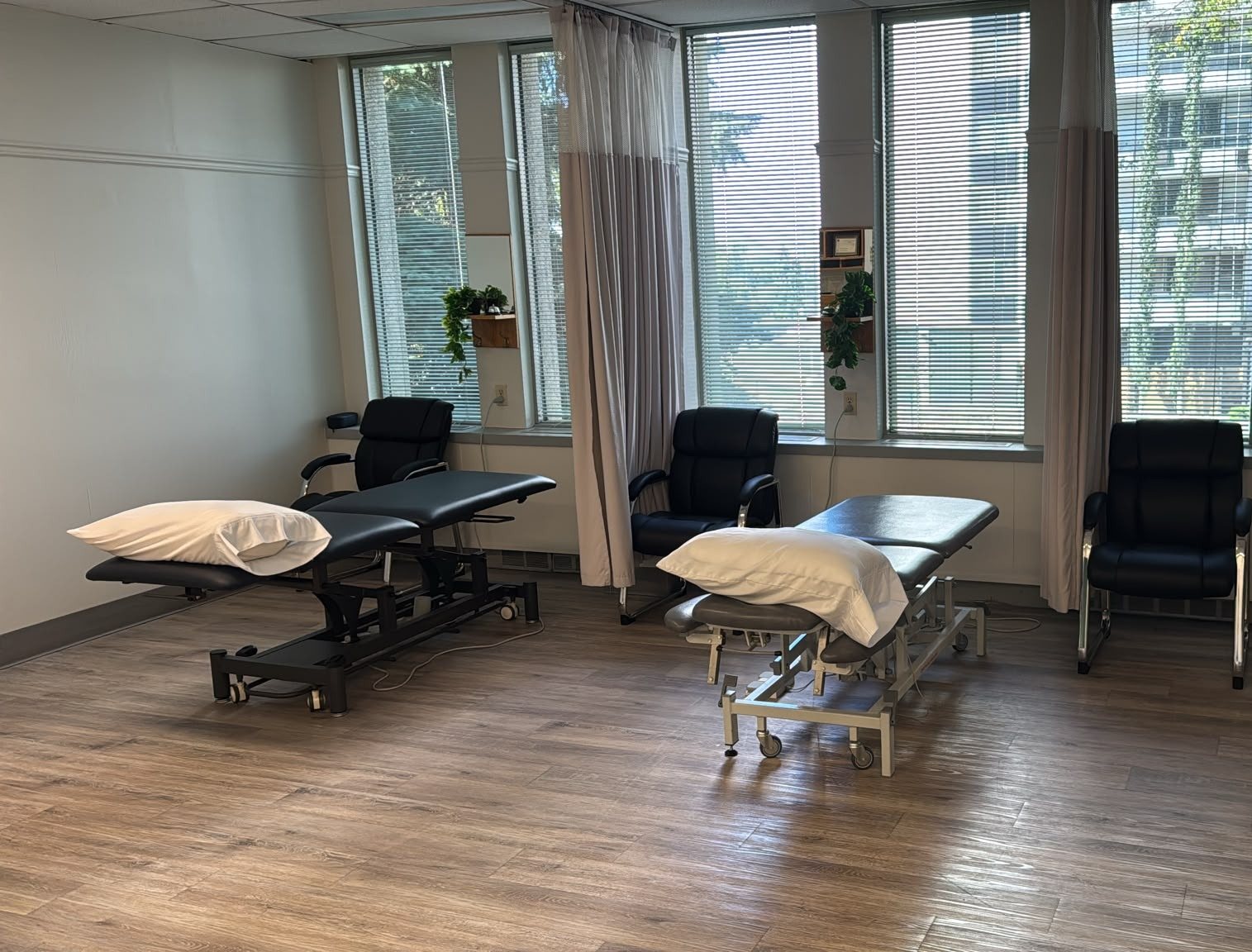
What an MVA physiotherapy assessment at Aura looks like
An initial MVA assessment at Aura is 40 minutes. We start by hearing what happened: the mechanism of injury, what was hurting in the first 24 hours, what is hurting now, and how it has changed.
We then do a focused physical examination of the affected areas (most commonly neck, upper back, shoulders, and lower back). We look at range of motion, strength, tenderness, and how the affected areas interact with the rest of your body. Whiplash injuries often involve more than just the neck. Your shoulders and mid-back tend to be doing extra work to protect the neck and need attention too.
Treatment starts at the same visit. Manual therapy, early gentle exercises, education on what to expect over the coming weeks, and a written plan that you and your physiotherapist agree on.
What to bring to your first MVA visit
- Your auto insurance claim number
- Your auto insurer's name and contact
- A piece of government-issued ID
- Any doctor's notes, ER reports, or imaging from the past few days
- Comfortable, movement-friendly clothing
- A short written timeline of what happened and what has changed since
Common MVA injuries we see in Edmonton
- Whiplash and neck strain. The most common MVA injury. Often shows up as stiffness 24 to 72 hours after the collision.
- Headaches. Tension-type headaches from neck and upper-back tightness are very common after rear-end collisions.
- Mid-back and lower-back pain. Especially common from seatbelt restraint and the twisting motion of impact.
- Shoulder injuries. The shoulder of the driving arm often takes the brunt of bracing on the steering wheel.
- Concussion symptoms. If you have headaches, dizziness, fatigue, or trouble focusing after a collision, you may have a mild concussion. Radha is University of Alberta certified in concussion and vestibular rehabilitation.
Book your MVA assessment at Aura
40-minute initial assessment, direct billing to your auto insurer under Alberta DTPR. Coverage depends on your claim. No referral required. Up to 21 treatments included.
Book now or call (587) 405-3174What to do at home in the first week
- Stay gently active. The old advice of "rest until the pain is gone" is outdated. Gentle movement (short walks, simple range-of-motion exercises your physiotherapist gives you) helps recovery.
- Sleep well. Sleep is when the body does its healing. Get at least 7 to 8 hours where possible.
- Use heat or ice carefully. Ice for the first 48 hours if there is sharp pain. Heat later for muscle tightness. Neither is a fix; both are temporary comfort tools.
- Take prescribed medications as directed. If your family doctor or pharmacist gave you anti-inflammatories or pain medication, take them as prescribed.
- Keep a symptom diary. Note what hurts, when it changes, and what makes it better or worse. This helps your physiotherapist and your insurance claim.
Common MVA physiotherapy questions
Do I have to wait for my insurance to approve treatment?
No. Under Alberta DTPR you can start physiotherapy as soon as your claim is open and you have a claim number. Direct billing means we handle the insurance side, you just come in for treatment.
What if the accident was my fault?
It does not matter for your medical treatment. Your own Section B coverage applies regardless of fault.
What if I do not have my claim number yet?
Call your auto insurer first to open the claim, even before booking physiotherapy. Most insurers can give you a claim number on the same call.
How many treatments will I actually need?
It varies by injury. A simple whiplash with no complicating factors might resolve in 6 to 10 visits. A more complex injury with concussion symptoms or chronic underlying issues may need 15 to 25+ visits. Your physiotherapist gives you a realistic plan at the first visit.
Should I see a lawyer?
If the accident was not your fault and you have ongoing symptoms, a personal injury lawyer can advise on tort claims separate from your Section B medical coverage. The medical care is independent of the legal side.
The bottom line
The first 72 hours after an Edmonton car accident set the trajectory for the next several months of recovery. Get medically assessed, open your insurance claim, and start physiotherapy early. Under Alberta DTPR, the treatment itself is covered, you do not need a referral, and you can begin right away.
Important: This article is general information only. It is not medical advice and it cannot be used to diagnose or treat any condition. Every patient is assessed first by one of our registered physiotherapists, our chiropractor or our registered massage therapists before any treatment, and your care plan is based on that assessment. If you have symptoms, please book an assessment.
