Manual Lymphatic Drainage After Surgery: A Guide for Edmonton Patients
Your surgery is behind you. The incision is healing. But the swelling around it is not coming down on its own, and the heaviness in your arm or leg has started to feel like a second injury. Or maybe you have been living with lymphedema for years, and you are looking for someone who actually knows what to do about it. Manual Lymphatic Drainage is one of the most under-explained therapies in Edmonton, so here is what it is, when it helps, and how it works at Aura Physiotherapy in the Oliver neighbourhood.
General information only, not a diagnosis. Our physiotherapists, chiropractor and massage therapists assess every patient first.
What MLD actually is
The lymphatic system is the body's drainage and immune network. It runs alongside your circulation but carries lymph fluid, which is rich in immune cells and helps clear waste, debris, and excess fluid out of tissues.
When that system gets overwhelmed (after surgery, after an injury, or in a chronic condition like lymphedema), fluid pools in the tissues. That shows up as swelling, tightness, heaviness, or a feeling that something is just not draining properly.
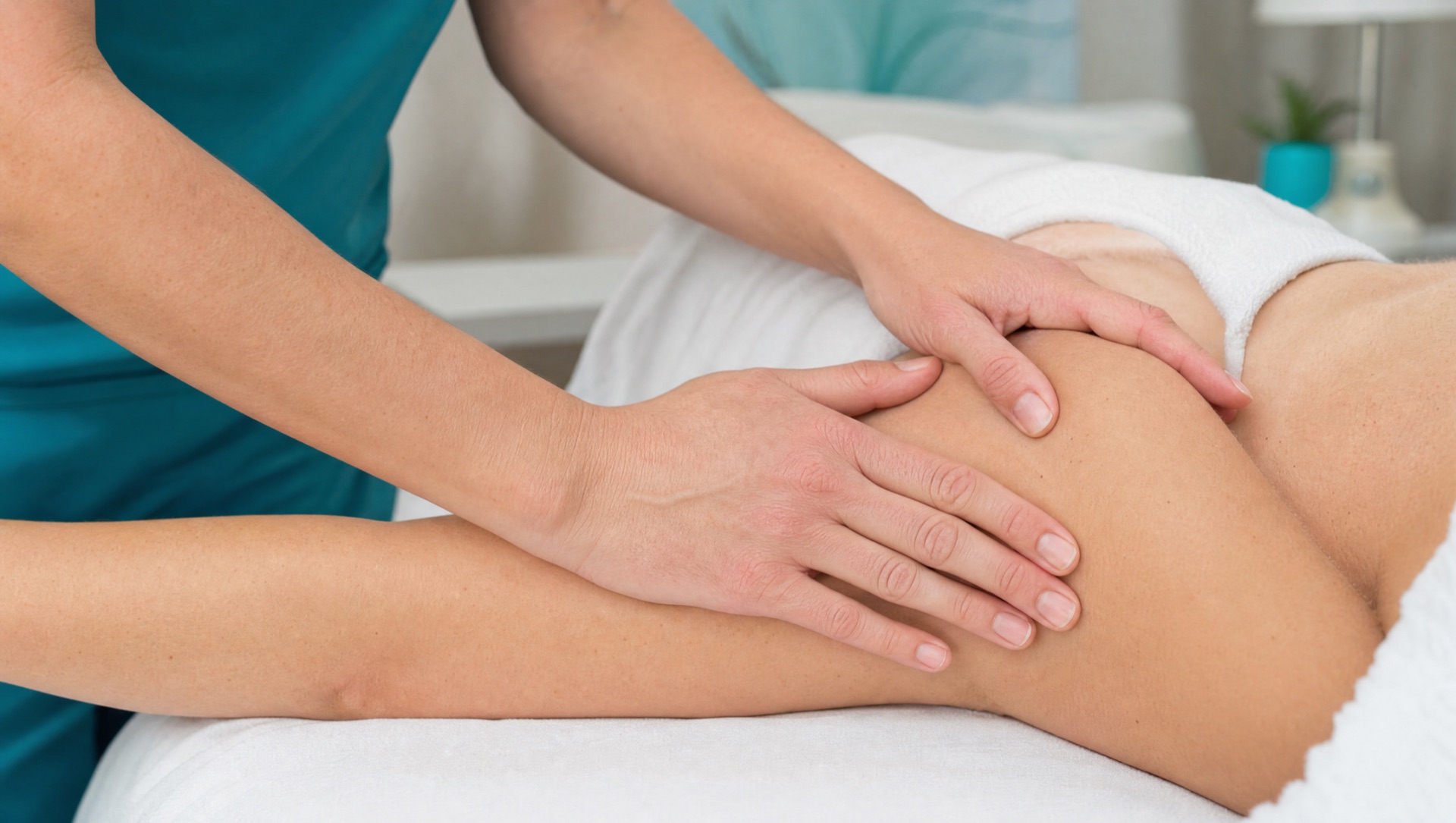
Manual Lymphatic Drainage is a specific style of light-pressure, rhythmic skin manipulation that supports how the lymphatic system clears fluid. It does not feel like a deep tissue massage. It is gentle, slow, methodical. Most patients find it deeply relaxing.
Common reasons people book MLD at Aura
1. Post-surgical recovery
After most surgical procedures, swelling is part of the recovery process. MLD is often included alongside your surgeon's protocol for procedures including liposuction, tummy tucks, BBL, mastectomy and breast reconstruction, joint replacements, and abdominal surgery.
If your surgeon recommends MLD as part of your recovery, the timing matters. Sometimes MLD is appropriate within the first few days after surgery. Sometimes it makes sense to wait until incisions have closed. Always follow your surgeon's clearance and timeline.
2. Chronic edema and lymphedema
For chronic conditions like primary or secondary lymphedema, lipedema, or venous insufficiency, MLD is often part of a broader management plan that may include compression garments, exercises, and skin care. The goal is supportive symptom management over time, not a single fix.
3. Recovery from intense training
Some active people in Edmonton book MLD as a recovery tool after long endurance events, hard training blocks, or to ease general tissue heaviness. This is supportive care, not a substitute for the conditioning work your body actually needs.
What an MLD session looks like at Aura
Sessions are delivered by Karthikeyan Diwakar, MPT, who is Vodder-certified in Manual Lymphatic Drainage, Complete Decongestive Therapy, and compression therapy at the Dr. Vodder School of Lymphatic Therapy.
A first MLD session is about 60 minutes. Follow-up sessions are typically 45 to 60 minutes. You lie comfortably on a treatment table, draped appropriately for the area being worked on. The pressure is light, like the weight of a quarter or two coins. The strokes are slow and rhythmic. You can ask questions or rest quietly, your choice.
Before your first MLD session
- Hydrate well in the hours before and after
- Avoid heavy meals immediately beforehand
- Wear comfortable, loose-fitting clothes you can change into after
- If your surgeon or specialist gave you a note about MLD timing, bring it with you
- Bring your insurance card if your plan covers physiotherapy
Pricing and direct billing
At Aura, MLD is booked as lymphatic massage in our online booking, in 30, 45, 60 or 90 minute sessions ($69, $89, $130 or $189). Whether your extended-health plan covers it depends on your plan and on the type of provider who delivers it, so check with your insurer before booking. We direct bill to 16 insurers including Canada Life, Blue Cross, Medavie Blue Cross, ManuLife, Sun Life, and Green Shield Canada. Bring your insurance card to your first visit.
You do not need a referral to book MLD at Aura. If your surgeon or specialist recommended MLD, share their note at the visit so we can coordinate with their post-surgical instructions.
What MLD is not
MLD is supportive care. It is not a cure for the underlying cause of swelling, and it is not a replacement for medical treatment of conditions like lymphedema, venous disease, or post-cancer recovery. It works best as one part of a broader plan that you build with your physiotherapist, your surgeon, and the rest of your care team.
If you have an active infection, a deep vein thrombosis, untreated heart failure, or certain other medical conditions, MLD may not be appropriate, or may need to wait. We screen for these things at your first visit and will tell you directly if MLD is not the right fit right now.
Book your MLD session
60-minute first session, $130, delivered by a Vodder-certified clinician in Edmonton's Oliver neighbourhood. Direct billing available. No referral required.
Book now or call (587) 405-3174How to know if MLD is right for you
The simplest path is to book a first appointment with Karthikeyan. He will hear your story, look at the area, talk through what MLD can and cannot do for your situation, and either start a session or refer you to something more appropriate.
Common signs that MLD might be worth exploring:
- Persistent swelling in an arm, leg, abdomen, or other area after a surgery
- A diagnosis of lymphedema, lipedema, or chronic venous insufficiency
- A recommendation from your surgeon, oncologist, or family doctor
- Heaviness, tightness, or skin changes in a previously injured or operated area
Common MLD questions
Does MLD hurt?
No. MLD uses very light pressure on purpose. Most patients find it deeply relaxing. If anything is uncomfortable, tell your clinician and we adjust.
How many sessions will I need?
It depends on the reason you are coming in. Some post-surgical patients need a short series (3 to 6 sessions over a few weeks). Chronic lymphedema is usually ongoing, supportive care. Karthikeyan will give you a clear plan at the first visit.
Is MLD the same as a regular massage?
No. MLD is a specific style of light-pressure lymphatic work, very different from deep tissue or relaxation massage. Massage Therapy at Aura is also available and is delivered by a Registered Massage Therapist, billed separately.
Do I need a doctor's referral?
No referral is required. If your surgeon recommended MLD as part of your recovery, bring their note so we can follow their protocol.
Will my extended-health plan cover MLD?
Coverage depends on your plan and on the type of provider who delivers the treatment, so check with your insurer before booking. We direct bill to 16 insurers; any amount you pay depends on your coverage.
The bottom line
MLD is one of the most underappreciated tools in Edmonton physiotherapy. For the right person, at the right time, it can be the difference between a stuck recovery and a moving one. If your surgeon mentioned it, or if you have been living with chronic swelling and feel like you are out of options, it is worth a conversation.
Important: This article is general information only. It is not medical advice and it cannot be used to diagnose or treat any condition. Every patient is assessed first by one of our registered physiotherapists, our chiropractor or our registered massage therapists before any treatment, and your care plan is based on that assessment. If you have symptoms, please book an assessment.
