
Vestibular Physiotherapy in Edmonton: What Actually Helps Dizziness and Vertigo
Vestibular physiotherapy treats dizziness, vertigo, and balance problems that come from the inner ear or the way the brain processes balance information. For the most common cause, benign paroxysmal positional vertigo (BPPV), treatment is often a specific repositioning manoeuvre rather than exercise or medication, and many people notice a substantial change within one to three visits. Persistent dizziness from other vestibular causes usually responds to a graded retraining programme over several weeks.
Dizziness is one of the more common reasons adults see a clinician, and one of the more commonly mismanaged. "Wait and see" is reasonable for a day or two. It is not a plan for something that has lasted weeks.
General information only, not a diagnosis. Our physiotherapists, chiropractor and massage therapists assess every patient first.
What vestibular physiotherapy is
Your sense of balance comes from three inputs working together: the vestibular system in the inner ear, your vision, and the position sense coming from your joints and muscles. When one of those inputs is disrupted, or when the three stop agreeing with each other, the result is dizziness, unsteadiness, or a spinning sensation.
Vestibular physiotherapy is the assessment and retraining of that system. A physiotherapist with vestibular training will test eye movement, positional changes, gaze stability, and balance under different conditions to work out which input is misbehaving. The treatment follows from what the assessment finds. It is not a single protocol applied to everyone who reports dizziness.
BPPV, and why it is worth identifying early
BPPV is the most common cause of vertigo. Small calcium carbonate crystals that normally sit in one part of the inner ear become displaced into one of the semicircular canals. When you move your head, those crystals move fluid they were never meant to move, and your brain receives a signal that you are spinning when you are not.
The signature is short, intense spinning triggered by a change in head position: rolling over in bed, lying down, looking up at a shelf. Episodes typically last under a minute, then settle until the next position change.
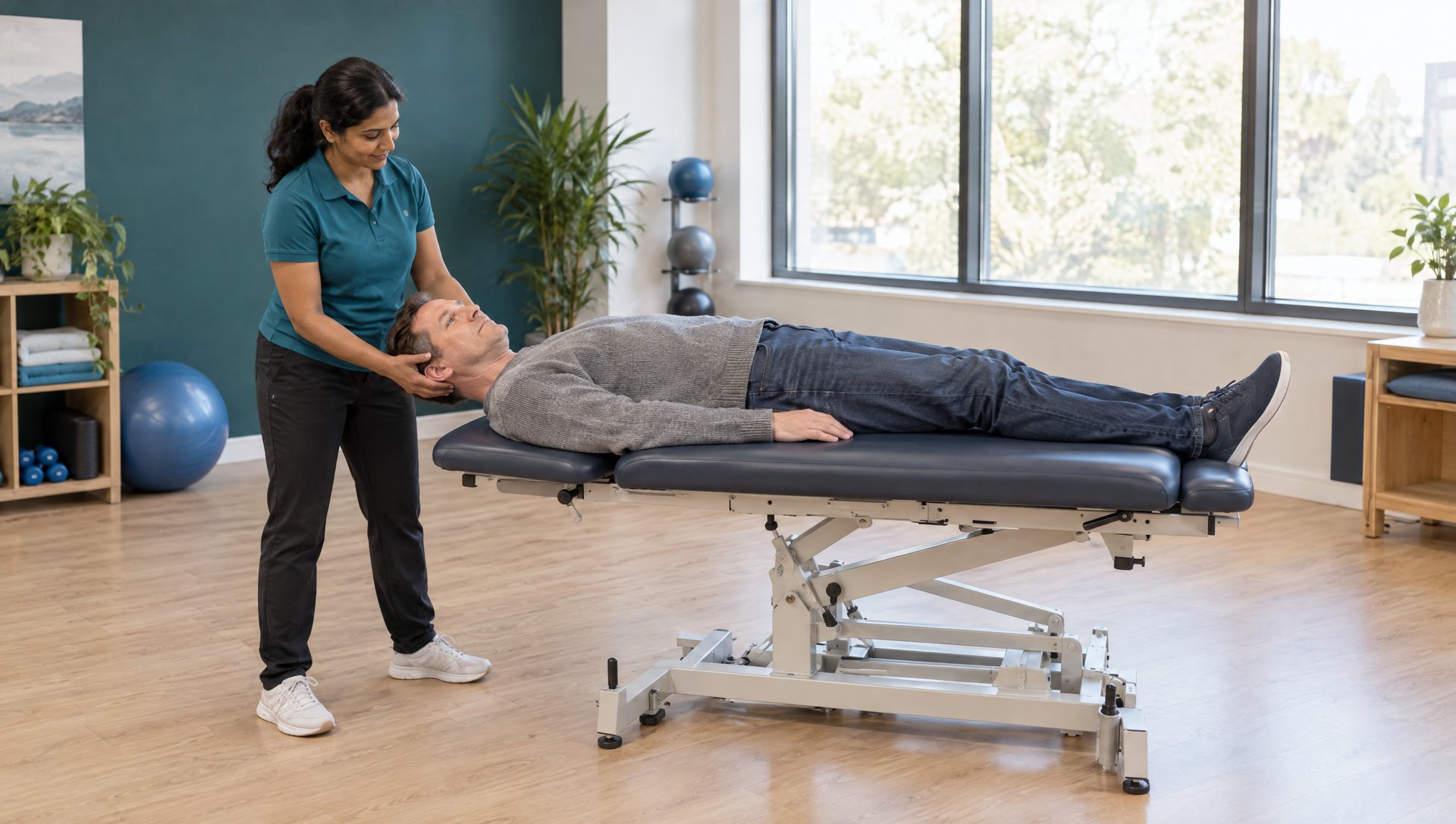
BPPV is identified with positional testing, most often the Dix-Hallpike test, and treated with a repositioning manoeuvre such as the Epley. The manoeuvre guides the displaced crystals back to where they belong. This is a mechanical problem with a mechanical solution, which is why it often resolves far faster than people expect.
When dizziness is not BPPV
Not all dizziness spins, and not all of it comes from crystals. Other patterns a vestibular assessment will look for include:
- Vestibular neuritis or labyrinthitis. Usually a sudden, severe onset lasting days, often after a viral illness, followed by weeks of residual unsteadiness that responds well to graded retraining.
- Vestibular hypofunction. One side of the vestibular system underperforming, producing unsteadiness and difficulty focusing when the head moves. Gaze stability exercises are the core treatment.
- Cervicogenic dizziness. Dizziness arising from the neck, common after whiplash, where neck treatment and sensorimotor retraining matter more than inner ear work.
- Post concussion dizziness. Often a mix of vestibular, visual, and autonomic factors, needing a broader rehabilitation plan.
The reason the distinction matters is that the treatments are genuinely different. Repositioning manoeuvres do nothing for cervicogenic dizziness, and neck treatment does nothing for BPPV.
What a first vestibular assessment involves
Expect about an hour. The history matters more here than in most assessments: how long each episode lasts, what triggers it, whether it spins or sways, whether hearing has changed, and what you have stopped doing because of it.
Testing typically includes eye movement examination, positional tests, gaze stability testing, and balance assessment on different surfaces and with eyes open and closed. Some of these tests will briefly reproduce your symptoms. That is expected, and it is how the problem gets located.
You leave with an explanation of what the assessment found, the treatment plan that follows from it, and usually two or three exercises to start at home.

Red flags that need a doctor first
Vestibular physiotherapy is appropriate for most dizziness, but not all of it. Seek medical assessment promptly if dizziness comes with sudden severe headache, double vision, difficulty speaking or swallowing, weakness or numbness on one side, a new hearing loss, or chest pain. Those patterns need medical clearance before rehabilitation begins.
Frequently asked questions
How many sessions does BPPV take?
Many cases respond substantially within one to three visits. Some need repeat manoeuvres, and BPPV can recur later, which is why patients are usually taught what to watch for.
Do I need a doctor's referral?
No. In Alberta you can book physiotherapy directly. A referral may be required by some extended health plans for reimbursement, so it is worth checking your own policy.
Will the exercises make me feel worse?
Vestibular retraining often provokes mild symptoms during and shortly after the exercises. That is part of how the system recalibrates. The dose is set so symptoms settle within a reasonable window, and it is adjusted if they do not.
Can I drive?
If you are having episodes of true vertigo, do not drive during that period. Discuss timing for returning to driving as part of your plan.
Important: This article is general information only. It is not medical advice and it cannot be used to diagnose or treat any condition. Every patient is assessed first by one of our registered physiotherapists, our chiropractor or our registered massage therapists before any treatment, and your care plan is based on that assessment. If you have symptoms, please book an assessment.
Booking
If dizziness has lasted more than a couple of weeks, changes with head position, or has started to change what you are willing to do in a day, it is worth having assessed properly rather than waiting it out.
Aura Physiotherapy, 11520 100 Ave NW #207, Edmonton, AB T5K 0J7. Call (587) 405-3174 or book at auraphysiotherapy.ca.
